Journal
What summer leaves behind, and why autumn is the honest season for skin

September is when skin tells the truth about summer.
While the tan lasts, everything looks even. As it fades, the real picture shows: dryness that was hiding underneath, patches of uneven tone, a barrier that worked hard for three months and is now tired.
This is not damage to panic about. It is information. And autumn is the best season to read it.
What summer actually leaves behind
Sun, heat, air conditioning, salt water, chlorine. Each one is manageable on its own. Together, over weeks, they pull water out of the skin and wear down its protective barrier.
Most people notice the same three things in September. Skin feels drier than usual, even with the same routine. Tone looks less even once the tan lifts. And skin reacts more: a product that was fine in June can sting in September.
None of this means summer was a mistake. It means the bill has arrived, and it is a normal one.
Why autumn is the honest season
A tan is a filter. It evens out how skin looks and hides what is happening underneath. When it fades, you finally see your skin as it is. That makes September the most honest month for an assessment. There is no filter left to argue with.
There is also a practical side. Ultraviolet light is weaker in autumn and winter. Some of the deeper treatments, the ones that need skin to stay out of strong sun while it heals, are usually planned for these months. That planning starts with an honest look at the starting point.
A tan is a filter. It evens out how skin looks and hides what is happening underneath.
Repair first, plan second
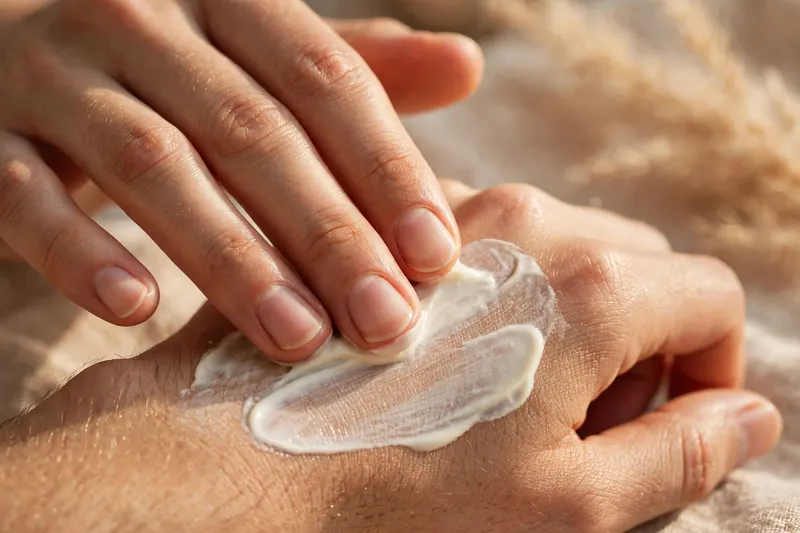
The temptation in September is to fix everything at once. Stronger products, more steps, a treatment booked in a hurry. Tired skin rarely responds well to that.
The order that works is slower. First, bring the barrier back: gentle cleansing, steady hydration, and products your skin already trusts. Give it a few weeks. Skin that is calm and hydrated is easier to assess, and it heals better from anything you plan next.
Only then does it make sense to talk about treatments. A good plan is built on rested skin, not on skin that is still asking for water.
What you can do right now
Keep it simple. Cleanse gently, moisturise well, and keep using sun protection. Ultraviolet A is present all year, through clouds and glass, so this habit does not end with summer.
Watch your skin for a few weeks and note what changes as the tan fades. Where does tone stay uneven. Where does dryness persist. These notes are genuinely useful at a consultation. They tell us where your skin actually is, not where the tan made it look.
And resist the urge to chase every patch of pigment with a new product. Some of it fades on its own as skin renews. What remains after a month or two is the part worth assessing properly.
The winter plan starts here
Autumn is not the season for rushing. It is the season for looking clearly, repairing what summer took, and deciding what comes next with a full picture in front of you.
If you want that picture drawn properly, a consultation in autumn gives you the whole winter to work with: an honest assessment now, and a plan that uses the low sun months well.